GymWolf
Member
Only when the next zelda is out, literally the only N game i give some fucks aboutTime to buy a Switch 2 mate
Only when the next zelda is out, literally the only N game i give some fucks aboutTime to buy a Switch 2 mate

Me too, but Sony is trying to build a significant audience and the casuals won't buy an expensive console.And i would pay for a premium console, so gimme gimme.
Yeah, mine was just wishful thinking.Me too, but Sony is trying to build a significant audience and the casuals won't buy an expensive console.
They are not waiting for more frames, they are adding 2-4 frames in between those two. Internal game speed in modern games should not be connected to fps.
Added lag is absolutely not problematic. If you don't trust DF, HW:
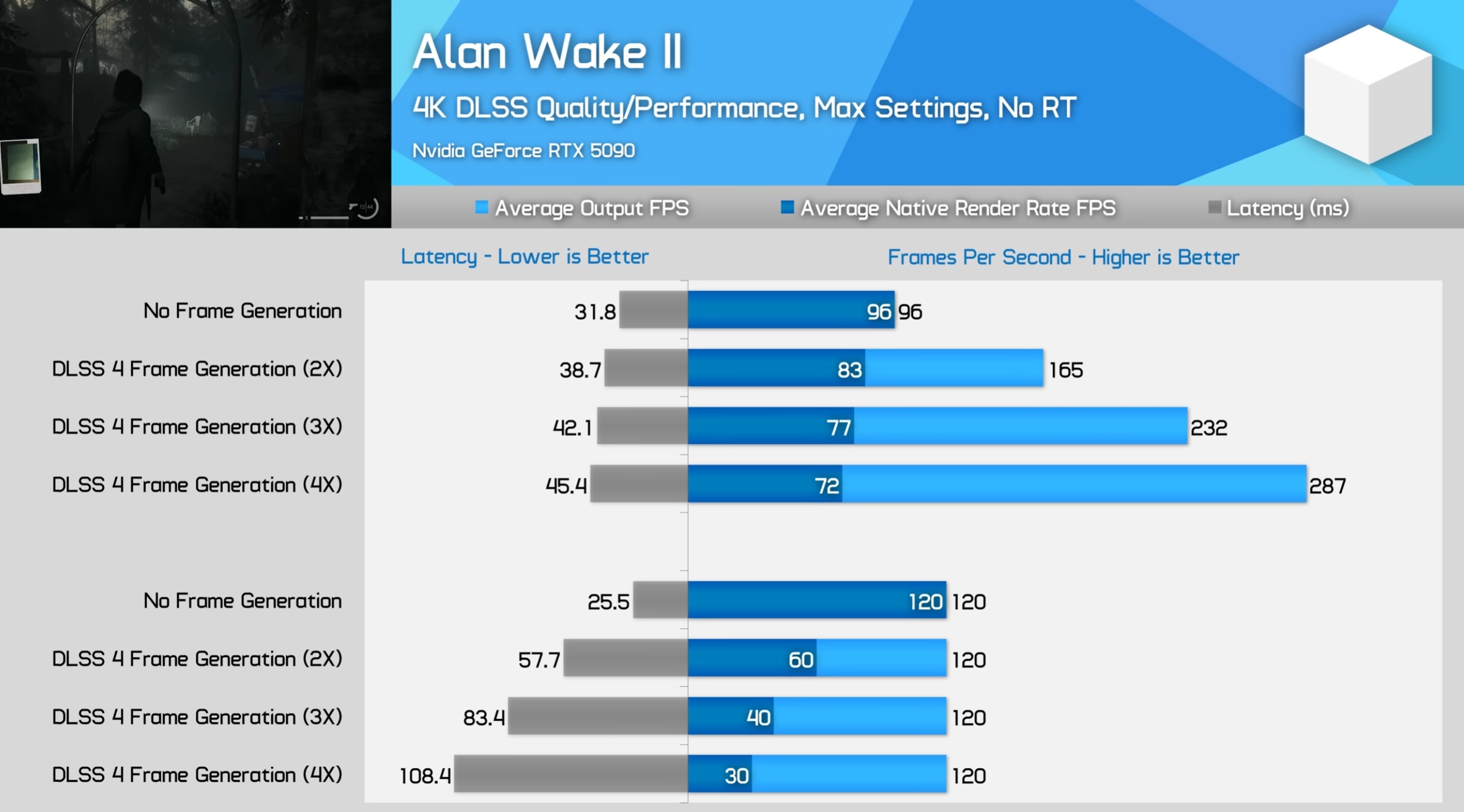
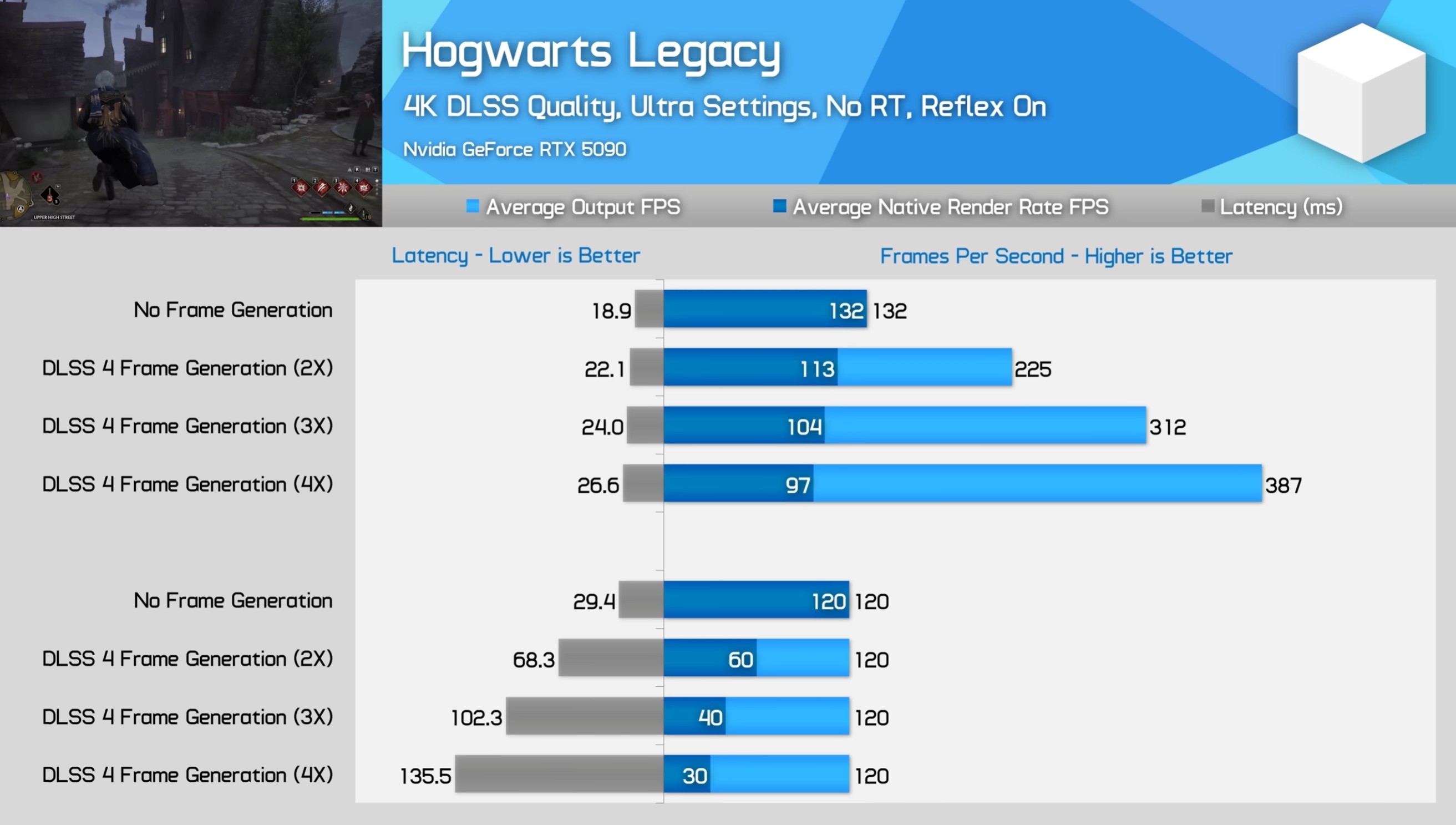
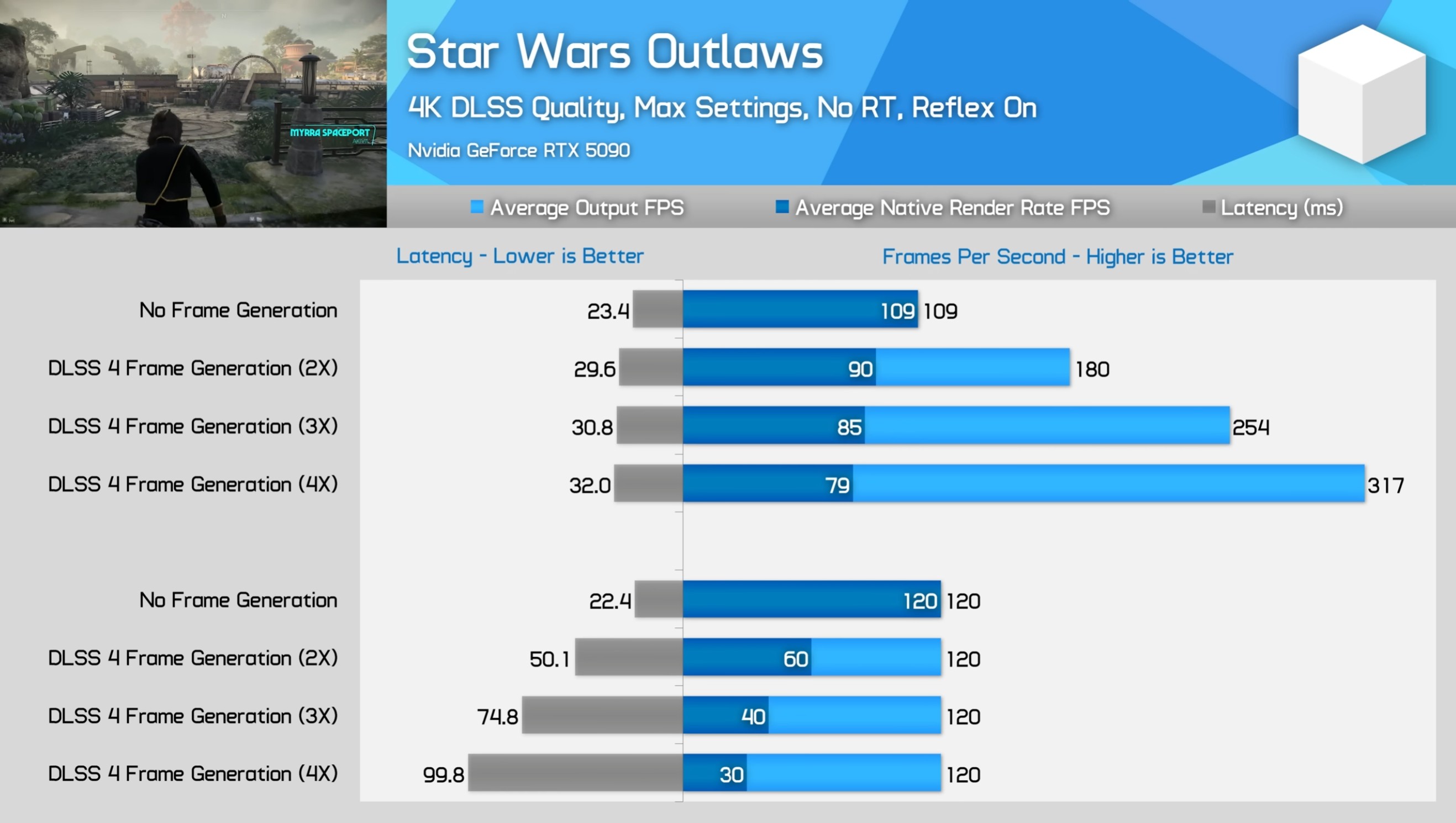
Lower graph is with vsync.

The whole thing seems pretty daft to be honest. I see latency going from 25ms to 108ms. That's pretty significant latency increase, x4 the latency. Is he using a 120hz monitor too? Which makes me ask why is he aiming for higher than 120fps with framegen (even 2x goes above). he's getting a lot of crap torn frames I'd imagine with nothing to show for it.

Such an own goal
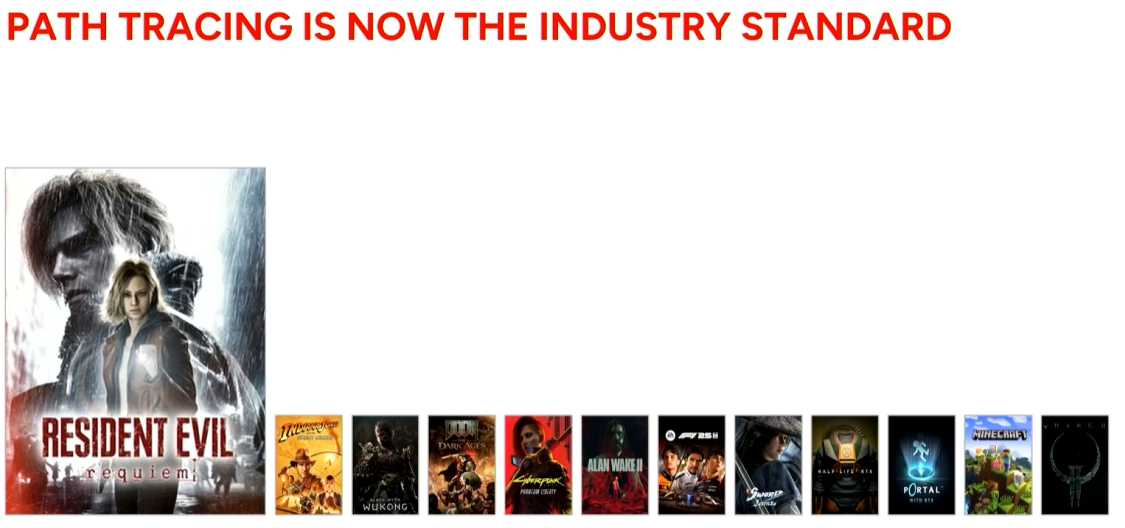
 They probably shouldn't use AI to generate their GDC slides without a human checking them for accuracy.
But his monitor refresh rate is 120hz. Notice that is his locked fps with vsync. This means in his other test he is also running a 120hz monitor and gaining nothing but torn frames and higher latency from MFG, even 2X he is hardly gaining much.What are you talking about? When you force on vsync, frame gen will have fps limit to internal framerate to match refresh rate.
You can even see higher latency with vsync off vs. on without frame gen.
MFS is meant for 240Hz+ monitors, for 120Hz 2x is enough. And vsync off results are REAL results, I don't know why he bothered to lock MFG with vsync.
But his monitor refresh rate is 120hz. Notice that is his locked fps with vsync. This means in his other test he is also running a 120hz monitor and gaining nothing but torn frames from MFG, even 2X he is hardly gaining much.
He should run those games at higher settings (RT) or more demanding games (eg with PT) and do tests. His current test has no real world application because nobody would really do what he's doing.

We dont know this yet.AGI cannot be achieved while scaling LLMs, nobody knows how to get there yet.
No they won't because the vsync latency results would be different.People that have HFR monitors will see exactly the same results. 240Hz+ monitors are a standard now.
I have 120Hz tv so I wouldn't even bother with MFG even if my GPU supported it. And difference in latency between no FG and 2x FG is just few milliseconds.


That for sure will happen, but not because they're trying to do that. It will simply be a side effect of their immense R&D budget.They will try to stay a step ahead of consoles and AMD.
No they won't because the vsync latency results would be different.
I have a 240hz ultrawide monitor and 120hz TV. I don't use framegen on either. Don't like it much.
It plays like soup in games I tried, whatever is claimed. And the stuttering without VRR is just offensive, so even if it was improving latency it's still not useable for me.Added lag is absolutely not problematic. If you don't trust DF, HW:
That means 4th frame has its input delayed by 5 frames.They are not waiting for more frames, they are adding 2-4 frames in between those two.
It plays like soup in games I tried, whatever is claimed. And the stuttering without VRR is just offensive, so even if it was improving latency it's still not useable for me.
That means 4th frame has its input delayed by 5 frames.
As you note - best case is base-input latency (so 2-4x worse than the output would be if it was native) + refresh cycle of generated frames (assuming absolutely 0 impact from the process itself).

GPU performance will improve in the future. News at 11.


Nah, the real question is - when?The real question is: how much?

People will start to like fake frames once they become standard on next gen consoles.
Except that a lot of the criticism on fake frames came from the PC crowd and not the console crowd, because they knew Nvidia's gen on gen increase in performance was laughable given the absurd costs the 40 and 50 Series retailed at. This problem is only going to get worse depending on how you see things.

1.000.000 steps ahead. PS6 already doomed in path tracing?!They will try to stay a step ahead of consoles and AMD.
ExactlyThere can't be any real criticism from console folks because like one or two games are using it (and Immortals is using it quite well).

How does PS5 / Xbox series compare to RTX3XXX series. That kind of difference could be expected.1.000.000 steps ahead. PS6 already doomed in path tracing?!
Exactly
So how did you jump to the conclusion that it will be "acceptable" once it's on consoles, because as mentioned most of the criticism is coming from the PC crowd to begin with.
At path tracing we really don't know as there is no game using it on consoles, but compared to equivalent PC GPUs they are very weak. And if the next AMD GPU, for Magnus and very probably PS6 too, is already "ready" and didn't get a gigantic step ahead of current AMD GPUs, Nvidia GPUs will obliterate them.How does PS5 / Xbox series compare to RTX3XXX series. That kind of difference could be expected.
Over time, they can leave consoles in dust though.

They are not waiting for more frames, they are adding 2-4 frames in between those two. Internal game speed in modern games should not be connected to fps.
Added lag is absolutely not problematic. If you don't trust DF, HW:
Lower graph is with vsync.

They are not waiting for more frames, they are adding 2-4 frames in between those two. Internal game speed in modern games should not be connected to fps.
Added lag is absolutely not problematic. If you don't trust DF, HW:
Lower graph is with vsync.
Very intuitive.and cap your max FPS at 236 on a 240hz monitor, not in game, but with the Nvidia App
Exactly, the added amount of latency is on the order of a few milliseconds, roughly 10ms at 4x FG at most.
It's not hard to configure correctly either. Just make sure vsync is enforced globally (disabled in game) and cap your max FPS at 236 on a 240hz monitor, not in game, but with the Nvidia App. Not exactly rocket science.
With a controller it feels and looks great. With a mouse the feel might be off for a bit. Not because you are noticing the added latency, but because the latency and vastly higher perceived frame rate can differ from what you are used to.
It's basically mostly advantages. No, the game doesn't feel or perform better, and motion clarity takes a massive leap.
I'll leave it to your imagination who is a console fanboy and who isn't lolI mean, you don't see console fanboys trolling about "fake frames" in some threads? They will start to like FG once it's available on their machines of choice.
I'll leave it to your imagination who is a console fanboy and who isn't lol
You can't interpolate any frame between two frame unless you've already render both frames. Unless you're generating frames by predicting which one is next. Anyways what you said about it being accepted when is common place is not true. We have FG in Wukong in consoles and it's awful. 30 to 60 is not good. 60-120, we'll see…
Very intuitive.
Even if you use zero frame generation, you would want to do that anyway, so as to stay under the maximum refresh rate and always use VRR plus not getting the latency penalty from Vsync. That has been how you configure Nvidia and VRR for over a decade now.Very intuitive.
Even if you use zero frame generation, you would want to do that anyway, so as to stay under the maximum refresh rate and always use VRR plus not getting the latency penalty from Vsync. That has been how you configure Nvidia and VRR for over a decade now.
You don't have to do it, but it gives you the best latency if you do so.

Absolutely nothing wrong with FG as long as the base native framerate is at least 60fps. And thats not even saying FG cant work on 30/40fps base, but that all that matters is the response time. If FG is layered onto a gamerunning at 60fps, then you still get your 60fps response time.People will start to like fake frames once they become standard on next gen consoles.
I don't think you understand how AI tech works.Unfortunately we are stuck with shitty amd tech on console.
Capping fps is not necessary - enabling frame Gen always enables reflex, which automatically caps below refresh rate.Exactly, the added amount of latency is on the order of a few milliseconds, roughly 10ms at 4x FG at most.
It's not hard to configure correctly either. Just make sure vsync is enforced globally (disabled in game) and cap your max FPS at 236 on a 240hz monitor, not in game, but with the Nvidia App. Not exactly rocket science.
With a controller it feels and looks great. With a mouse the feel might be off for a bit. Not because you are noticing the added latency, but because the latency and vastly higher perceived frame rate can differ from what you are used to.
It's basically mostly advantages. No, the game doesn't feel or perform better, and motion clarity takes a massive leap.
I just cap anyway, not all games have FG or I always use FG, and capping makes sure I am in the VRR range, even if playing a game with no reflex support.Capping fps is not necessary - enabling frame Gen always enables reflex, which automatically caps below refresh rate.

Yeah I honestly cannot tell the whole fake frame vs real frame thing. 1440p on RE Requiem with 5070ti 9800xd3. And Pathtracing DLAA looks photo realistic but get low frame rate in the 40s without framegen but with frame gen x2 which is my permanent setting now I get 60s to 80s usually in the 70s to 80s and it super smooth. And don't notice any difference visually at all between with or without framegen on, just that framegen makes the game butter smooth while keeping photo realistic graphics.100%, bookmark it!
Ill say it again, for me. If the game is over 60FPS and I get fake frames to 100 ish then its fine for me on single player games. Im getting consistantly over 100 FPS on RE Requim from a base of between 60 - 80. It plays, feels and looks incredible on my 5080 or 4090.
Thats maxed out with PT at 4k Balanced DLSS. looks bonkers
I was not talking specifically about this news.Absolutely nothing wrong with FG as long as the base native framerate is at least 60fps. And thats not even saying FG cant work on 30/40fps base, but that all that matters is the response time. If FG is layered onto a gamerunning at 60fps, then you still get your 60fps response time.
To me, I take FG the same way I take AI reconstruction... if done right, it makes the game better and 95% of people won't even know why. That's a win in my book.
Now this 1xxx times improvement... what the hell does that number even mean? We saying it's pushing more rays? Or more intersections? Or that AI is going to be able to make it look like it was, so you can use even fewer native rays or something?
I hate these x times this or % more that type stuff, its not really telling us anything.
I don't think you understand how AI tech works.
In the world of AI, you are only limited by your hardware, actually, having matrix tech or not. The second you do, all bets are off. Here is the crazy thing, you don't even have to run AMD based AI code on AMD AI hardware... An AI model is just like any other piece of software running on a specific type of hardware. And when everyone has that kinda hardware... well, lets just say things start to get very interesting. Its the same thing with RT... devs write a specific RT code, AMD hardware runs it one way and Nvidia hardwarre runs it another, but at their core they are working offf the same data sets.
Obviously you don't have to use VSync but you clearly want to use what is best and I'm questioning the usefulness of this benchmark in doing that. It doesn't really provide anything useful and makes the point that you shouldn't enable framegen with this setup.But you don't have to use vsync on HFR monitor.
And vsync will increase latency only if your framerate is hitting the refresh rate wall, with 240Hz-360Hz you have plenty of room for that.

My 5070ti will last me for 6-7 years.
NVIDIA has teased its future GPUs with massive path tracing performance capabilities thanks to AI & RTX advancements, as Moore's Law is Dead.
NVIDIA Says Moore's Law is Dead, Will Rely On RTX & AI Advancements To Deliver Massive Performance Leaps In Path Tracing Performance With Future GPUs
During GDC 2026, John Spitzer (NVIDIA VP of Developer & Performance Technology) presented a path tracing roadmap that showcases the leaps that each of their GPU architecture brought. The roadmap starts with Pascal (GTX 10 series), which was released almost 10 years ago in April, 2016. The architecture was a revolution at the time, but featured a software RT core, so it wasn't very usable for Path Tracing, let alone Ray Tracing.
The first architecture that brought Ray Tracing support was Turing (RTX 20 series) in 2018, and that saw the advent of DLSS and RTX. NVIDIA says that despite Turing and its follow-ups featuring better hardware capabilities for RT, they couldn't have brute-forced their way to get a reasonable performance jump that allowed them decent performance for ray tracing. This is because Moore's Law doesn't scale as well as it used to.

NVIDIA Says Its Future Gaming GPUs Will Bring A 1,000,000x Leap In Path Tracing Performance By Using RTX / AI Advances
NVIDIA has teased its future GPUs with massive path tracing performance capabilities thanks to AI & RTX advancements, as Moore's Law is Dead.wccftech.com
Hell yeah guys
brace yourselves for 1000X MFG !!
Timestamp (motion-2-photon latency**)Nonsense. All frames are inserted between two real frames, latency difference between 2x and 4x is minimal.
Native 60hz
F(N) -------- F(N+1)
16(33)        33(33)

Native 240hz
F(N) --- F(1/4) --- F(2/4) --- F(3/4) --- F(N+1)
16(8)    20(8)      24(8)      28(8)      33(8)

4x FG from 60->240
F(N) --- F(1/4) --- F(2/4) --- F(3/4) --- F(N+1)
16(37) 20(41) 24(46) 28(51) 33(55)The latter works poorly, that's all I'm saying.And FG is not meant to be used without VRR. But you can make it work with fixed refresh and it's not even too bad (force on vsync in the driver).
No one uses FG from 30 to 60 on PC, it's retarded.

I don't disagree - but it doesn't stop people from doing it and parading it all over.Nvidia says about something like 40FPS+ being the lowest possible FPS for acceptable results with FG? And this is correct.


The marketing math for this isn't even that hard to arrive at. Pre RTX, a single path traced frame on a single gpu can take hours. Now an equivalent path traced frame takes 1/240 of a second with 3x mfg. Voila! "More than one million times"!Such an own goal

Unfortunately we are stuck with shitty amd tech on console.