• Hey Guest. Check out your NeoGAF Wrapped 2025 results here!

Do most games fail to explore adulthood—and is that why so many stories end at ‘saving the world’ instead of living in it?

Do you want a dating sim or something?

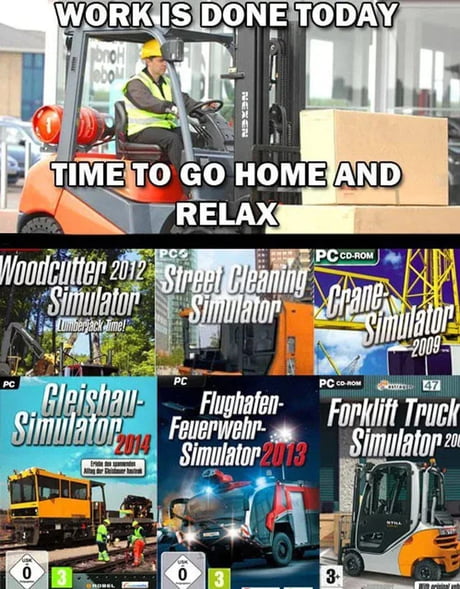
I play games to get away from kids, mortage, car payments, groceries, keeping the house clean... etc.

I'm not going to play the Sims or Factorio in my free time, this is just too much.
 
It's not just games, anime too.

Frieren: Beyond Journey's End addresses this directly. It literally takes place after the main quest is over. Some games perhaps explore this I would think….cant think of any…
I mean doesn't Uncharted 4 do this in a way at the beginning, like it's just Drake doing a normal day job but bored out his mind with how mundane life has become.
 
Why the fuck would I want to live real life in games? Theres certain sims for that if you want living your adulthood in games, but I prefer stories where I can escape adulthood, be a hero like Shepard, or Doom guy, save the world the end. I dont want to see them taking a shit.
What if it's them ripping off their opponent's head and shitting down their neck?
 
This may come as shock for most of you but I don't play games to be "mature", I'm playing games to have fun.
 
Lately, I've been reflecting on how many games focus on escalation, apocalyptic scenarios, or world-saving stakes. Still, very few seem interested in what happens afterwards—or even in the quieter realities of adulthood.

By adulthood, I don't just mean age, but responsibility, compromise, repetition, emotional residue, relationships that don't resolve neatly, and lives shaped less by destiny than by accumulation. Games are excellent at simulating systems, labour, traversal, and optimisation—yet strangely hesitant to explore themes like maintenance, regret, care, or the slow erosion and rebuilding of meaning.

Is that because "saving the world" is a more straightforward, more dramatic conclusion than "living in it"? Or because interactivity struggles with stories that don't rely on escalation and mastery?

There are exceptions—games that hint at aftermath, routine, grief, or responsibility—but they remain rare and are often seen as niche or "boring." Which prompts the question: is this a limitation of the medium, a market issue, or a creative blind spot?

Interested in whether people believe games can genuinely explore adulthood—or if the medium is inherently biased towards ongoing adolescence and heroic conclusions.

Aren't you describing The Sims?
 
I consider TLOU 1+2 to deal with a lot of adult themes. No, they don't involve going to work and paying the mortgage, but if they did you wouldn't play them. The games strike a good balance between the immediate drama of zombie apocalypse along with deeper themes.

The other game that springs to mind is That Dragon, Cancer. Whether it is a good game, I have no idea. And I've no doubt there are many other games like this, but I can't remember any off the bat.

Oh right, the To The Moon series should fit here.
 
Last edited:
I think that, while games should be escapism, there is no need for the stakes to get so high every damn time.

You could have a story about war between countries, without it spiraling into the usual apocalyptic scenario with one dude suddenly achieving god status and threatening to destroy the whole world as we know it. Too many games start it right and then just have to up the ante to impossible levels. Xenoblade and almost all of the Final Fantasy games do this. Even Chrono Trigger does, albeit it presents the world destroyer in another time, which is a great way to justify how pacific things are at the beginning of the game. But really, did FF7, 8 and 9 have to go to the lengths they go? FF7 would have worked great as a battle of the heroes vs Shinra, without Sephirot ending up doing what he does. No need in these games to have things escalate to the LOTR scenario of apocalyptic evil looming over everything.

I guess that's why a series like Yakuza resonates with many people, even in the west. The main dude doesn't end up flying or smashing down buildings even if he has superpowers of a sort, and the plots are mostly about mundane stuff taking place in everyday Japan. It's a nice half ground between the cosmic battles and the farming simulators.

Me, I don't get the appeal of Animal Crossing and the likes of it. I don't see the point of taking care of a virtual daily routine, a virtual house, a virtual garden, a virtual village, when I should spend that time curating my irl environment instead.
 
Maturity is overrated.

Me, every time some one says I'm not acting my age:

napoleon dynamite yes GIF
What are the guidelines of how to act in your 80s?
Try not to break a hip when you sneeze or you fart?
 
I have to deal with routine, grief and responsibility in the real world. I have a full time job, have a family to provide for etc. I don't want to replicate this fully in a video game environment.

I'm never going to go on a fantastical adventure and save the world. Video games allow me to access this escapism fantasy.

Escapism is the key word here for me. Video games give people an escape from the mundane everyday realities of the real world. They also need to be fun before anything else.

Games are excellent at simulating systems, labour, traversal, and optimisation—yet strangely hesitant to explore themes like maintenance, regret, care, or the slow erosion and rebuilding of meaning.

Don't a lot of games do this already? Maintenance and care can be found in RTS and simulation games. Regret can be found in most games, but especially RPGs.

You'd need to elaborate on slow erosion and rebuilding of meaning, as those concepts sound a bit vague for a video game.
 
I have to deal with routine, grief and responsibility in the real world. I have a full time job, have a family to provide for etc. I don't want to replicate this fully in a video game environment.

I'm never going to go on a fantastical adventure and save the world. Video games allow me to access this escapism fantasy.

Escapism is the key word here for me. Video games give people an escape from the mundane everyday realities of the real world. They also need to be fun before anything else.


Don't a lot of games do this already? Maintenance and care can be found in RTS and simulation games. Regret can be found in most games, but especially RPGs.

You'd need to elaborate on slow erosion and rebuilding of meaning, as those concepts sound a bit vague for a video game.
I understand the reasonable argument for escapism but culture / people will need to reckon with an unsustainable escape from those concepts. A good mix is ok, kids and young adults being raised unable to deal with stress, conflict, compromise, responsibility, etc… does not work.
 
Interested in whether people believe games can genuinely explore adulthood—or if the medium is inherently biased towards ongoing adolescence and heroic conclusions.
I gotchu, bro:
ayNe4xY_460s.jpg


Men's life is hard enough, so when we get those few hours in a week when we finally arent bothered by any1 and can actually relax enjoying our hobby, we dont wanna experience exact same nasty shit we experience all the fuckin time IRL :messenger_spock:
 
I just want to play a video game to have fun. Do things i can't do in real life like explore dangerous places and murder people.

Me, I don't get the appeal of Animal Crossing and the likes of it. I don't see the point of taking care of a virtual daily routine, a virtual house, a virtual garden, a virtual village, when I should spend that time curating my irl environment instead.
I think i do see the appeal. Animal Crossing is a very cozy game and many people don't have that in their life. Maybe they don't have their own home to decorate. I mean, these days, having your own home is so unrealistic, you might as well look for a real dragon to fight.
 
Last edited:
Fuck realism. The more over the top something is, the better. And yes, something can be over the top without any fantasy/sci-fi elements.
 
I think plenty of games do engage with adulthood, even if not always in especially substantial ways. Take something like Football Manager for instance. You're constantly dealing with morale and happiness, making decisions you might regret later, managing relationships with players, agents and the board. A lot of that responsibility has consequences that linger and don't always resolve cleanly.

You see similar ideas everywhere. Elden Ring has questlines like Nepheli's that are very clearly built around themes of adulthood and responsibility, although within a heroic structure, but it's there.

That said, I think there are real limitations, because games are designed as interactive entertainment. Most players want satisfying gameplay loops and some form of reward, not prolonged emotional ambiguity. The backlash to TLoU2 is a good example of this. A lot of that response came from people being uncomfortable with the lack of catharsis and the way the game forces you to sit with regret and unresolved outcomes. In many ways, this is closer to lived adulthood than to the clean closure of a traditional narrative driven game, and it's also why it proved so divisive.
 
I understand the reasonable argument for escapism but culture / people will need to reckon with an unsustainable escape from those concepts. A good mix is ok, kids and young adults being raised unable to deal with stress, conflict, compromise, responsibility, etc… does not work.

Video games shouldn't be a medium to teach people how to live in the real world. They're supposed to be a fun escapism.
 
Video games shouldn't be a medium to teach people how to live in the real world. They're supposed to be a fun escapism.
They can be both, there is space for both. Every medium can take that hatch. I am not talking about politics or heavily abstract concepts. Just that struggle to have fun makes fun more enjoyable when you overcome problems (why the Dark Souls of the world are a good thing too), responsibility can matter over convenience, personal struggle can be instrumentally good! Again, healthy mix and basic core apolitical concepts.
 
You need good writers for that, and in the gaming industry most aren't even writers, to start with. They havent read a book other than Harry Potter so asking them to make a consistent worldbuilding is not realistic.

For example, TLOU's worldbuilding is atrocius. Nothing makes sense in that 20-year-after post apocalyptic society. People still adhering to the rules and language of the old world is just dumb. It doesn't matter because it's a videogame and the story is about action and personal dramas, very much like female fantasies (The Hunger Games being a prime example of dumb setting).

Your idea would work in a complex RPG like Fallout or a survival game, but not in action-adventure.
 
Last edited:
Everyday life in Shenmue felt a lot like this. Many people enjoyed it, I found it boring though. It was well implemented though. You could observe one person and its daily routine, like going to the market buy food, then entering into the restaurant. One hour later, the restaurant would be open and the person greet you etc... A small town simulator in a way.

And the story is not about saving the world either.
 
Last edited:
They can be both, there is space for both. Every medium can take that hatch. I am not talking about politics or heavily abstract concepts. Just that struggle to have fun makes fun more enjoyable when you overcome problems (why the Dark Souls of the world are a good thing too), responsibility can matter over convenience, personal struggle can be instrumentally good! Again, healthy mix and basic core apolitical concepts.

Forgive me, but I'm slightly lost now.

Are we suggesting that Dark Souls is a valid example for the OP in a game that teaches people about living in the real world? I've always just seen the Souls series as challenging games. They certainly haven't taught me life lessons.

Apologies if I've misunderstood your post.

This is a little bit much for me. I just want to play games to relax and escape the real world for a bit.

If I want some deep, thoughtful, hard-hitting stories then I'll read a book or watch a film. Video games are just my way of switching off.
 
It's not just games, anime too.

Frieren: Beyond Journey's End addresses this directly. It literally takes place after the main quest is over. Some games perhaps explore this I would think….cant think of any…
Currently watching this anime and it's great.
 
Lately, I've been reflecting on how many games focus on escalation, apocalyptic scenarios, or world-saving stakes. Still, very few seem interested in what happens afterwards—or even in the quieter realities of adulthood.

By adulthood, I don't just mean age, but responsibility, compromise, repetition, emotional residue, relationships that don't resolve neatly, and lives shaped less by destiny than by accumulation. Games are excellent at simulating systems, labour, traversal, and optimisation—yet strangely hesitant to explore themes like maintenance, regret, care, or the slow erosion and rebuilding of meaning.

Is that because "saving the world" is a more straightforward, more dramatic conclusion than "living in it"? Or because interactivity struggles with stories that don't rely on escalation and mastery?

There are exceptions—games that hint at aftermath, routine, grief, or responsibility—but they remain rare and are often seen as niche or "boring." Which prompts the question: is this a limitation of the medium, a market issue, or a creative blind spot?

Interested in whether people believe games can genuinely explore adulthood—or if the medium is inherently biased towards ongoing adolescence and heroic conclusions.
Most people play games because finds that boring and want to experience something else to disconnect for a while. In particular, guys normally enjoy big explosions, big guns, big boobs, cars and sport.

In any case, there's a gazillion games who are about topics you mention. A recent good example is Death Stranding 2.
 
Last edited:
Top Bottom